Friday, 22 June 2012

Science: It's a girl thing - unlike this video!

This video is so dreadful I hardly know where to begin.  If you haven't seen it, here it is:

This video tells girls looking at science, well nothing.  It's just models dancing sexily for a guy in a lab coat, while things go wrong in the lab.

What messages could girls, as the target audience be taking away from this:
  • You should look sexy for the men scientists
  • You should love pink
  • Stuff might be happening in labs, but you should be too busy dancing to notice
  • Safety glasses are just like sunglasses
  • Science - not a woman thing
There is no information whatsoever.  There aren't even any women scientists.  Or any science.  Gah!

I want to write more on this (maybe later), but I have SCIENCE to do!

(Really, I have a paper due Monday!)

Thursday, 7 July 2011

Sexism in the Skeptical and Atheist Communities

There has been something of an internet storm regarding sexism in the atheist and skeptical communities. For those of you who haven't followed it, Rebecca Watson (from http://skepchick.org/) posted a video which included a brief anecdote of being propositioned in an elevator at 4am in a hotel at a convention (having earlier that day spoken on a panel about sexism in that community). She said "Guys, don't do that". This was picked up by PZ Myers and that post attracted a lot of comments. Amongst the discussion were some comments by Richard Dawkins that showed a spectacular lack of understanding of the issue.

You can find some really great posts on the situation, here are a few:


I wanted to post about this for one reason: The issue really needs highlighting. For someone as prominent as Richard Dawkins to have such a fundamental lack of understanding and empathy is sad. That so many of the other comments are so similar is worse.

Yes, there are worse problems, and worse instances of this problem. That doesn't make this not a problem. If we can't do something to fix sexism in our own, supposedly enlightened communities, how are we going to make the whole world a safe place?

I wrote a letter to Richard Dawkins that I have sent to Skepchicks to add to their collection. In case it doesn't make the site, here it is:

Dear Professor Dawkins,

You asked (http://scienceblogs.com/pharyngula/2011/07/oh_no_not_againonce_more_unto.php#comment-4309418) for an explanation of what you aren’t getting (i.e. why Rebecca’s experience was bad), so I thought I would write to you to explain.

I count myself lucky, because I have never suffered serious physical injury as the result of an assault. That does not mean I have never been assaulted; it does not mean I have never feared for my safety; it does mean that I will (must) continue to conduct myself with my personal safety being a conscious priority at all times.

This may seem a bit extreme. Particularly given that you don’t see an elevator as a threatening context, I’m sure you wouldn’t see any issues with a relatively crowded train carriage in the middle of the afternoon. And yet, that was the location of my first negative experience at just 17 and newly arrived in a big city. The carriage was sufficiently crowded that when a stranger sat next to me, it was to be expected. When he struck up a conversation (asking me the time), it seemed perfectly natural. When he asked if I had a husband, that struck me as odd, but before I could react he had pinned me to the seat (using his body weight which was significantly more than) mine. While telling me he was going to marry me, he started removing my skirt. I vocally and physically resisted, of course, however, I was trapped and nobody came to my aid. I did manage to escape when he tried to drag me off the train.

You may ask how this relates to Rebecca’s experience. Firstly, was the location; in a seat on the train or in an elevator, neither location allowed for a quick or easy escape from danger. Secondly, was the time frame, it took seconds for things to go from perfectly normal to horribly wrong. If Elevator Guy had not taken the initial “no” for an answer, Rebecca would not have had time to press a button and wait for the elevator to stop. While you are right, the situation did not escalate this time, there was a situation. How bad do things need to get before they are bad? Touching? Forcibly removed clothes? Rape? Murder?

This kind of situation occurs all the time. Sometimes things escalate, sometimes they don’t. But you can never tell when they will, and when the do escalate, you don’t have time to act. So I have found it necessary to pre-empt things, to conduct myself with my personal safety being a conscious priority at all times.

Perhaps, you are dismissing my anecdote as just that, a one-off experience that is unlikely to be repeated. Unfortunately it was not a one-off experience for me (and it was by no means the worst), and I’m sure that it wasn’t a one-off experience for Rebecca. The 2006/2007 British Crime Survey, 1 in 200 women aged 16 to 59 reported that they had suffered rape or attempted rape in the previous year. That’s approximately 85,000 rapes and attempted rapes in England & Wales in only one year. Given this prevalence, and the rapidity with which a situation can escalate, it is only rational that women are cautious in potentially dangerous situations.

Rebecca’s elevator situation could have been easily avoided. That’s all she asked for. If you don’t have to regularly think about your personal safety, if you haven’t ever experienced or witnessed a situation go horribly wrong, then I’m sure it isn’t obvious when you are creating that situation which is indistinguishable from one that ends in assault. Rebecca asks, I ask, society asks that you try to notice and that you try not to create those situations in the first place.

Surely it is common decency not to put someone in a situation where they are genuinely and reasonably afraid for their safety. That is what you aren’t getting.


Sincerely yours,
Kristen

Hi...

Well, it has been a long time since I posted anything. Over the last nearly two years I've had a lot going on, including some health issues that aren't entirely resolved.

Anyone still following me, thank you! I'm starting to feel a little better, so for now, I'm going to try to get back to posting.

Since I last posted, I've become a little more familiar with the skeptic, atheist and feminist communities (although not as much as I would like). I'm still passionate about science and I'm still working as an engineer.

I'm not sure what niche I'd like this blog to fit in to, so I will mostly be posting when things in particular attract my attention and hopefully I'll be able to nestle out a little niche all of my own.

Thursday, 25 March 2010

Disappointed

I've just read through a brochure produced by a large Irish construction consultancy. Of the 36 "Senior Personnel" listed at the back, there was not a single woman!

Wednesday, 24 March 2010

Guylène Proulx #ALD10

It's Ada Lovelace Day! Ada Lovelace Day is an international day of blogging to celebrate the achievements of women in technology and science. There's not a whole lot of women in my little corner of the industry, so one name in particular sprang to mind: Guylène Proulx.

Dr. Proulx was a Senior Researcher in the Fire Research Program at the National Research Council Canada. She had a Ph.D. degree in Architectural Planning from the University of Montreal. She had a unique expertise in human behaviour studies in emergency situations. Her research involved interviewing survivors after fires and conducting evacuation experiments in buildings. She was on the Board of Directors of the Society of Fire Protection Engineers and she was also teaching in fire protection
engineering at Carleton University and at the Worcester Polytechnic Institute.

Sadly, Dr Proulx passed away late last year. This is from an announcement of her posthumous appointment as an Officer of the Order of Canada:
Announcements - NRC Researcher Dr. Guylène Proulx is appointed to the Order of Canada

January 11, 2010 — Ottawa, Ontario

Dr. Guylène Proulx was posthumously appointed as an Officer of the Order of Canada on December 30, 2009, by the Right Honourable Michaëlle Jean. Dr. Proulx was recognized for her contributions to fire safety research during her career, more specifically, for her studies on photoluminescent material, smoke alarms and human behaviour during emergencies, the majority of which were undertaken at the National Research Council of Canada.

Dr. Proulx joined the Fire Research Program at the NRC Institute for Research in Construction (NRC-IRC) in 1992. Some of her many areas of research included the investigation of human response to alarm bells, voice communication messages, evacuation movement, typical reactions and social interaction — all during emergency situations.

Dr. Proulx's research has had a profound impact on fire safety worldwide —the impact of her work not only has helped save countless lives but will continue to do so far into the future. Her findings on smoke alarms and photoluminescent materials are currently being used to ensure safety in buildings across Canada and around the world. Considered as one of the leading experts in her field, she was invited to participate in many post-event investigations, including the 1993 World Trade Center attacks. As a result of her findings, a new emergency way-finding system and evacuation strategy was implemented at the World Trade Center, which has been credited with helping to save lives during the 9/11 terrorist attacks.


Although most people will probably never know her name, her research has contributed to saving countless lives.

Thursday, 11 March 2010

Finding Ada

I've just heard about Ada Lovelace Day 2010!

From the website:
Ada Lovelace Day is an international day of blogging (videologging, podcasting, comic drawing etc.!) to draw attention to the achievements of women in technology and science.

Women’s contributions often go unacknowledged, their innovations seldom mentioned, their faces rarely recognised. We want you to tell the world about these unsung heroines, whatever they do. It doesn’t matter how new or old your blog is, what gender you are, what language you blog in, or what you normally blog about – everyone is invited. Just sign the pledge below (click ‘pledge’ after you have completed the reCaptcha) and publish your blog post any time on Wednesday 24th March 2010.


I will be posting on the 24th :)

Please help spread the word!

Thursday, 9 July 2009

Busy, busy, busy

It has been a week and a half since my last post! The reason for this is that I have been flat out preparing a paper for a conference :) It's not done yet (it needs to be submitted by the 18th), but things are nearly under control.

The lesson I need to learn from this it that I need to write the paper (or at least do the research) before I submit the abstract, and not just submit my idea for a project. I guess I didn't really think it would be accepted. I've never submitted an abstract before. The problem with doing the paper first is finding the time/motivation to do the work without knowing that they will be accepted anywhere. And as I work in the Private Sector, time and motivation are very precious resources.

I hope to be back to at least weekly posts after next week, so please keep watching this space!

Science: So What Is Looking for a Dialogue Manager

From the Science: So What Campaign. A job opportunity for someone who shares their interests.

Dear Bloggy People,

Having recognized some of the shortcomings of SSW online to date, and in an attempt to listen to the feedback we’ve received and act appropriately, we’re hoping you might help in publicising the opportunity below.

Time is shorter than we’d like so we’re trying to publicise this in the science blog space in the hope of attracting the right kind of applicants quickly. We’ve taken recommendations from bloggers and other stakeholders and are going to try and whittle down to a shortlist for interview in the next week or so. Whilst we recognise this is not ideal, we’re hoping you’ll understand why.

Any help you might give us in publicising this would be very much appreciated – if you want any more info on the campaign please mail us at the very catchy sciencesowhatcommunicator at googlemail dot com

Science: So What? is a Department of Business Innovation and Skills campaign to encourage wider public engagement in science at all levels – from casual interest to education and employment opportunities – as well as promoting greater understanding of why science is important to the UK.

As part of refreshing the campaign we are now looking for a science communicator to find, create and edit online content and manage dialogue across the web and social media.

We’re looking for people that have a track record as a science writer, the ability to write for diverse audiences (including young people) and excellent working knowledge of online science content, social media etiquette, and the principles of good science communication.

We imagine this to be a part-time role in the first instance, but we are open-minded as to how the role will develop and would hope that you would want to be a part of that ongoing development.

If you would like more information please contact Science: So What with your name and contact details and a brief paragraph describing your experience at email address: sciencesowhatcommunicator at googlemail dot com

The anticipated remuneration for this part-time position is £500-£750 per month, and is subject to negotiation, depending on agreed duties, hours etc.

Monday, 29 June 2009

Antimicrobial Oregano Soap

The other day I was given a sample of some lovely (if a little strange) oregano and rose soap. I was rather surprised to be told by the shop assistant that oregano could kill MRSA. It seems I missed this story towards the end of last year about a University of West England project that had received funding to further investigate the potential. The antimicrobial properties are apparently due to a compound called carvacrol. This looks like an interesting line of research, but what about my soap? How much cavracrol do you need to be effective, and how much of it is there in my soap?

I only have access to the abstracts on pubmed, but this study indicates a concentration of 200mg/l had an antimicrobial effect on E. Coli and this study found an antimicrobial effect with carvacrol levels of approximately 1.0%. Wikipedia tell me that carvacrol has a density of 0.9772 g/cm3, so that would make a 1% concentration in the order of 9800 mg/l, or almost 50 times more than the first study. I'm not sure of the details of the studies and how they would affect the concentrations of carvacrol required, but clearly they make a big difference. In lieu of further information, I'll go with the 1% figure for now.

The soap list oregano oil (origanum vulgare) as one of its ingredients, of which carvacrol makes up between 44 and 85% according to this paper. So, it would take roughly 2% of the soap being oregano oil to reach the 1% concentration. You can't tell from the list of ingredients just how much oregano oil is used, but 2% sounds reasonable to me*. I haven't taken into account dilution of the soap in water, but I have taken the conservative figures in the calculations, so I think that it shows that the soap is plausibly acting as an antimicrobial.

*This is definitely a weak spot in my analysis, I have no soap making experience on which to base this statement.

Friday, 26 June 2009

Swine Flu

Reading this blog reminded me that I wanted to look into the real risk of swine flu. What are the chances of catching it? What are the chances of dying from it? Is this all a storm in a teacup?

Typing "swine flu mortality" into Google yields this article (as the first page, no less) that nicely explains the concepts of virulence, case fatality ratio (CFR) and mortality. I'm not a medical expert in any respect, but it does pass my "common sense test", so I will summarise it (although I really recommend that reading it for yourself if you are interested):
  • virulence is severity of the disease the virus produces (note that this is related not only to the virus, but also the host. I'm only going to be talking about humans)

  • CFR is a measure of virulence - it is the probability of someone who has caught swine flu dying from it

  • mortality rate is the percentage of the population that die from swine flu

  • it is very difficult to put accurate numbers to these rates

However I have noticed that many places are using mortality rate interchangeably with CFR, but I will try to stick to the definitions above.


World Health Organisation (WHO) figures (via the UK government)
as of the 26th June are 59,814 cases worldwide and 263 deaths. This gives a CFR of just over 0.4%. For comparison Wikipedia gives the following figures:
1918 flu pandemic >2.5%
Asian flu <0.1%
Hong Kong flu <0.1%
Seasonal flu <0.05%


So, it looks like swine flu is more deadly than normal seasonal flu, but not nearly as deadly as the 1918 pandemic, once you've caught it. But how easy is it to catch it?

The WHO has declared swine flu to be a phase 6 pandemic, meaning that there is widespread human infection. Their assessment of the pandemic includes:
"H1N1 appears to be more contagious than seasonal influenza. The secondary attack rate of seasonal influenza ranges from 5% to 15%. Current estimates of the secondary attack rate of H1N1 range from 22% to 33%."


So swine flu is easier to catch than normal flu, as well as being more virulent. However is is worth noting that the World Health Organisation FAQ about swine flu "what is level 6?" says that the pandemic is moderate.
The moderate assessment reflects that:

* Most people recover from infection without the need for hospitalization or medical care.
* Overall, national levels of severe illness from influenza A(H1N1) appear similar to levels seen during local seasonal influenza periods, although high levels of disease have occurred in some local areas and institutions.
* Overall, hospitals and health care systems in most countries have been able to cope with the numbers of people seeking care, although some facilities and systems have been stressed in some localities.


Based on the above, I conclude that swine flu is indeed worse than seasonal flu, but not the end of life as we know it that some people fear. Luckily, the recommended precautions are not too onerous:

* cover your mouth and nose when coughing and sneezing, using a tissue
* throw the tissue away quickly and carefully
* wash your hands regularly with soap and water
* clean hard surfaces (like door handles and remote controls) frequently with a normal cleaning product

Thursday, 18 June 2009

Homeopathy Awareness Week

The Society of Homeopaths (SOH) has declared this week (14th-21st June) Homeopathy Awareness Week. I have decided to following in the footsteps of the quackometer, zeno, neurologicablog, dcscience and skepticblog (amongst many others, I'm sure) and help to raise awareness of the con that is homeopathy.

Firstly, what is homeopathy?
From the SOH website:
Homeopathy is a system of medicine which is based on treating the individual with highly diluted substances given in mainly tablet form, which triggers the body’s natural system of healing.

The key phrase there is "highly dilute". Common sense tells us that when we dilute something that it gets weaker: think adding a cola to your JD; it doesn't taste as strong and it takes a greater volume to get you drunk than if you left the cola out. Why would we want to dilute the medicine? Luckily, the SOH foresaw that question...

Still from the SOH website:
If they are so dilute, how can they work?
After each dilution the mixture is vigorously agitated in a machine that delivers a calibrated amount of shaking. This is called succussion. It is thought that this process imprints the healing energy of the medicinal substance throughout the body of water (the diluent) as if a message is passed on. The message contains the healing energy. Even in ultra-molecular dilutions, information specific to the original dissolved substance remains and can be detected.

"Succussion"? Just because you make up a word for it, doesn't make it make any sense. Lets hope there was no agitation anyhwere previously (sewage treatment works, anyone) to imprint the water with the wrong sort of energy and pass on that message. If there is, we'll never get rid of it; even diluting it won't work. Given how long the water on earth has been going around the cycle, just imagine what messages it has picked up? It would be a wonder if the message of the healing energy would even be able to be heard over the rest of the messages? And just how does the body hear the message anyway? The SOH don't seem to have foreseen these questions. Oh well, moving on...

So how do the homeopaths pick what medicine to dilute in the first place?
It works on the principle of “like cures like” - that is, a substance that would cause symptoms in a healthy person is used to cure those same symptoms in illness. For example, one remedy which might be used in a person suffering from insomnia is coffea, a remedy made from coffee.

Have another coffee to help me sleep? I think their example speaks for itself: utter nonsense.

Logic and common sense are both failing me here, maybe there is some research to back up their claims. Although lots of studies have been done (just type homeopathy research into google), a meta-analysis of many of these studies conluded:
There is some evidence that homeopathic treatments are more effective than placebo; however, the strength of this evidence is low because of the low methodological quality of the trials. Studies of high methodological quality were more likely to be negative than the lower quality studies. Further high quality studies are needed to confirm these results.

In essence, no, there is no research to back up their claims.

To summarise, homeopathy makes no sense and does not stand up to scientific scrutiny. So please, raise awareness of homeopathy, and perhaps save someone's time, money and health from this sorry excuse for healthcare product.

Monday, 15 June 2009

Science Geekette now on Twitter

All the cool kids are doing it...

Actually I really am getting into twitter. You can follow me here: http://twitter.com/supergeekette

In the process of adding people and feeds to follow, I have really dicovered just how many good bloggers there are out there. I am quite in awe, and although this is my first venture out of my safe little corner of the internet, I hope that I will be able to make my own valuable contribution. It might take a while for me to be get the hang of it, but if I don't try, I'll never get there.

So, please follow me!! And as always, any constructive and friendly comments and advice are not just welcome, but sought after!

Wednesday, 10 June 2009

Girls aren't even enrolling in Engineering!

I was reading over at http://www.nerdgirlarmy.com that women accounted for only 12.7% of enrollments in engineering in Australia in 2007. The proportion of girls doing engineering has been dropping for several years now and this really worries me!

As a professional engineer, I can regale you with difficulties I have faced. But in the long run, I have clearly not found anything insurmountable, as I'm still working as an engineer.

I can (and do) extoll the virtues of engineering to friends, family, strangers on the street and, most importantly, school students. But despite many such initiatives, we seem to be going backwards. I am starting to think that we haven't defined the problem properly and until we do all our solutions are going to be ineffective.

The real question isn't "why did I choose engineering?" but "why DIDN'T girls choose it?". Of course, how we go about answering that question is a problem of it's own. (But I for one haven't given up)

Posted by ShoZu

Friday, 29 May 2009

The placebo effect

Today I read an article in the Daily Mail (link to come). Despite starting out about hypnotism, the article concluded that there may be benefit in homeopathy due to the placebo effect. I don't want to discuss homeopathy today (suffice it to say that I am not a believer), there are two ways in which I contend that this conclusion is irresponsible.

Firstly, the conclusion may encourage people to delay getting the appropriate medical advice and/or treatment. Particularly as the author of the article is listed in the byline as science editor and such position of authority only adds weight to this sort of advice.

Secondly, I find the suggestion that the placebo effect is an appropriate clinical treatment totally reprehensible. I rely on my GP to provide me with the expert medical knowledge that I don't possess myself. I ultimately make my own decisions regarding any treatment, but in doing so I rely on the advice my doctor gives me. So I don't want my doctor lying to me! For a placebo treatment to be effective, they would have to do just that. Even should no effective treatment be available (in which case a placebo treatment would be the only option), the trust would already be broken and I would never again be sure of the advice I was being given. Clearly there are more and more complex scenarios that could be debated, however neither a short blog entry, nor a newspaper article, is the place for it.

Tuesday, 19 May 2009

It's been a while...

... but I think it is time to dust this blog off again. And maybe this time I will get around to publicising it ;)

The current case (discussed by New Scientist here) of Simon Singh being sued by the BCA has caught my interest. I want to do more research before I make public comment, but at this stage it has me worried!

Monday, 18 August 2008

Optical Illusions

Here is a quick article on pictures that appear to move, even though they are definitely static.
http://www.newscientist.com/blog/technology/2008/08/just-illusion-still-images-that-move.html

I'm definitely interested in this, so I'll do a bit of reseach and post more later.

Monday, 28 July 2008

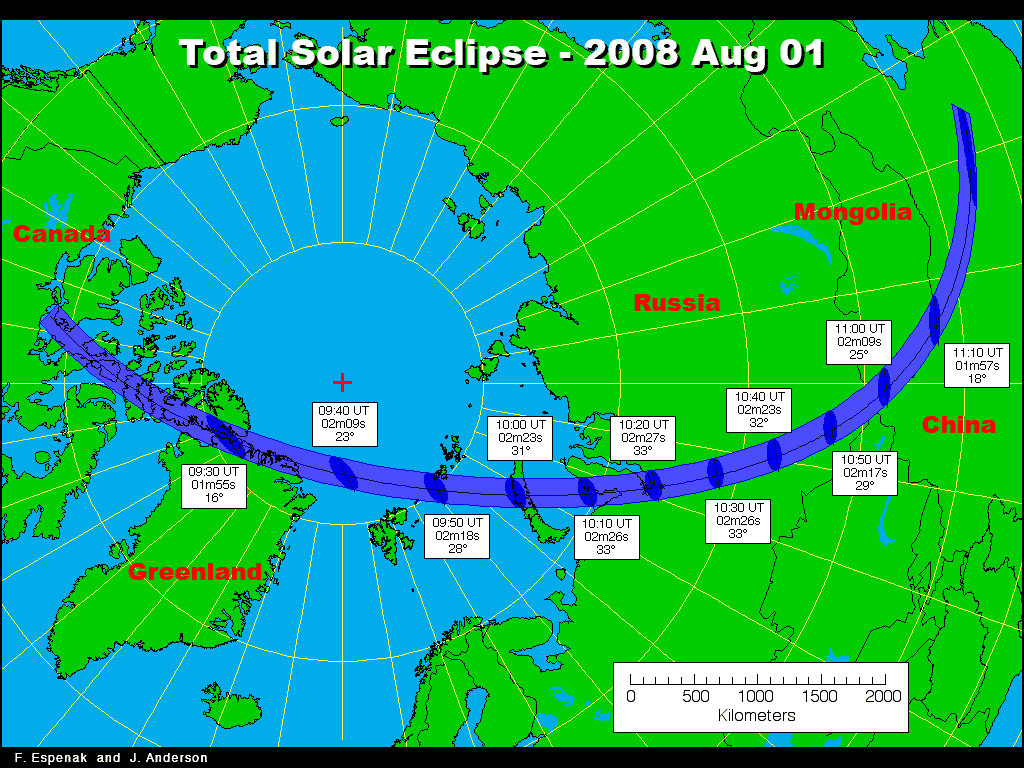
Total Eclipse!

On Friday, 1st August 2008, there is going to be a total eclipse of the sun. Unfortunately, you will need to be in the arctic or northern china to see it, but most people in Europe should be able to see a partial eclipse. You can see an image of the path that the full eclipse will take here:
http://eclipse.gsfc.nasa.gov/SEmono/TSE2008/TSE2008iau/TSE2008-fig02.GIF

This photo of the 1999 eclipse was by Luc Viatour.

http://commons.wikimedia.org/wiki/Image:Solar_eclips_1999_4.jpg

If you aren't in the right part of the world to see this one yourself, there are websites that will be showing the full eclipse. Scientific American has lots more details here:
http://www.sciam.com/report.cfm?id=solar-eclipse&sc=rss

If you are eclipse watching, remember not to look directly at the sun, especially through binoculars! For safe ways to view the eclipse, have a look here:
http://www.sciam.com/article.cfm?id=tips-for-eclipse-watchers

This is a photo by NASA was taken from the Mir space station of the Aug. 11, 1999 eclipse.


An eclipse of the sun happens when the path of the moon takes it directly between the earth and the sun. Essentially, the earth passes through the shadow of the moon. This is different to a lunar eclipse, when the moon passes through the shadow of the earth.

The shadow you can see is the area labelled the umbra in the diagram to the left. In this shadow is where you can see a total eclipse. Outside the umbra, in the penumbra, is where you will see a partial eclipse. If you have protective glasses, you should see a crescent shaped sun.

Happy watching!

Sunday, 27 July 2008

Men on the moon again?

The US seems to be planning it, but it will be a while before it happens:
http://www.timesonline.co.uk/tol/news/uk/science/article4406564.ece

NASA are planning "moon town" and hope to start construction within a decade. The first residents are due to move in 2024, if all things go according to plan.

Friday, 11 July 2008

The Colour of Light

If you are like me, then you were probably taught in school that there are three primary colours: red, yellow and blue. So why do TVs and computer screens use red, green and blue? And why does the office printer use CYMK (cyan, yellow, magenta and key)? And isn't light a spectrum anyway?

To answer the last question first; yes, light is a spectrum. Light is part of the electro-magnetic spectrum like microwaves, radio waves and x-rays that all have different wave lengths. Visible light (to the human eye) has wave lengths between about 400 and 700 nanometres (one nanometre is 0.000 000 001 metres). The longer the wave length, the more red the light seems (shorter wave length look more blue).

The three colours concept is partly to do with our eyes. We see colour through 'cone cells' on our retinas. Humans have three types of cone cells that respond to three different wave lengths, and our brain combines the responses from all three types to determine the colours in between. We can use this knowledge of how the eye works to trick our brains into seeing the whole spectrum by using just three colours.

For additive colours, like TVs, the three best colours for allowing us to see the whole spectrum are red green and blue. TVs are called additive colours because the produce the specific wave lengths that our eyes respond to, and by adding our response to each wave length together, we see the colour in the middle. For example, if we are seeing yellow on a TV, the TV is actually emitting red light and green light. This is picked up by our red and green cones, and our brain interprets the two signals by perceiving yellow (which is in between red and green on the spectrum). If the TV emits all three at once, then all the cones are reacting, and we perceive white.

Printers, on the other hand, use subtractive colours: the pigments absorb light of different wave lengths to produce different colours. Normal daylight contains the whole spectrum of colours, and the pigments absorb specific bits of the spectrum. For example, if a pigment absorbed more blue light than any other wave length, then when we look at that pigment, the cones that respond to blue won't react, but the ones that respond to red and green will, and we will see yellow. If you then add in a pigment that absorbs red light (which by itself would look green-blue or cyan), then only the cones that respond to green will react. So if you mix a yellow pigment and a cyan pigment, you get green. Magenta is a pigment that absorbs green. If you mix all three pigments, all the light should be absorb, producing black. In reality, it is almost impossible to produce black through mixing three pigments like that, so K (just a black pigment) used by printers for better efficiency.

So what of red yellow and blue? According to the wikipedia page (http://en.wikipedia.org/wiki/RYB_color_model) , they where historically used from the 18th century. Although because bright greens are hard to produce with red, yellow and blue pigments, green was also often used as primary colour. Similarly, black and white were (are) also often used as primary colours too.